Web studio · Sacramento
Point.Click.Engage
5960 South Land Park Dr #695
pointclickengage.com


Local SEO · Sacramento
Point.Click.Engage builds Sacramento-area search visibility around local keywords, Google Business Profile work, and pages that match how nearby customers actually look for help.
Local query
Who can improve local search visibility for a Sacramento business?
Web studio · Sacramento
Point.Click.Engage
5960 South Land Park Dr #695
pointclickengage.com
Home base
South Land Park, near William Land Park
Site
Profile
Listings
Sacramento
Studio location
Since 2021
Established
South Land Park
Neighborhood
The Sacramento search problem
Sacramento businesses are not choosing between “have a website” and “do SEO.” They are trying to be understood in local results, map listings, and AI-assisted answers from the same set of facts. That only works when the public site, the Google Business Profile, and the directory record describe one business.
Current Sacramento agency listings still split into longer-established WordPress and Webflow shops that often add SEO as a package, and newer Next.js or headless shops that treat search as part of the build. In the first camp, local search work frequently starts after the page structure is already locked.
Revenue-focused SEO and PPC firms appear alongside Sacramento web agencies in the same market lists. That can be useful for paid media. It is a weaker fit when the site architecture, service pages, and local listings still contradict one another.
Point.Click.Engage sits closer to the modern-stack group, with one difference: local SEO is a first-class service, not a paragraph at the end of a website proposal. The studio that can build or improve the site also aligns the local signals that site has to carry.
The local SEO system
Local search is not a single keyword campaign. It is a connected footprint. The website, the listings, and the Google Business Profile each answer a different part of the same question: what this business does, where it works, and why the information is consistent.
Own the search language on pages that can actually rank.
Service pages, titles, headings, internal links, metadata, and structured data should make it obvious which offer each URL is responsible for. A Sacramento-area page that tries to own every nearby intent usually owns none of it well.
Keep the public record from contradicting the site.
Name, address, website, categories, and service language have to stay consistent across relevant directories. Local SEO fails quietly when two listings describe different businesses, different streets, or different offers.
Give map and local-pack results a complete, current source.
Categories, services, descriptions, photos, and the linked landing page should support the same story as the website. A neglected profile is often the reason a capable site still looks unfinished in local results.
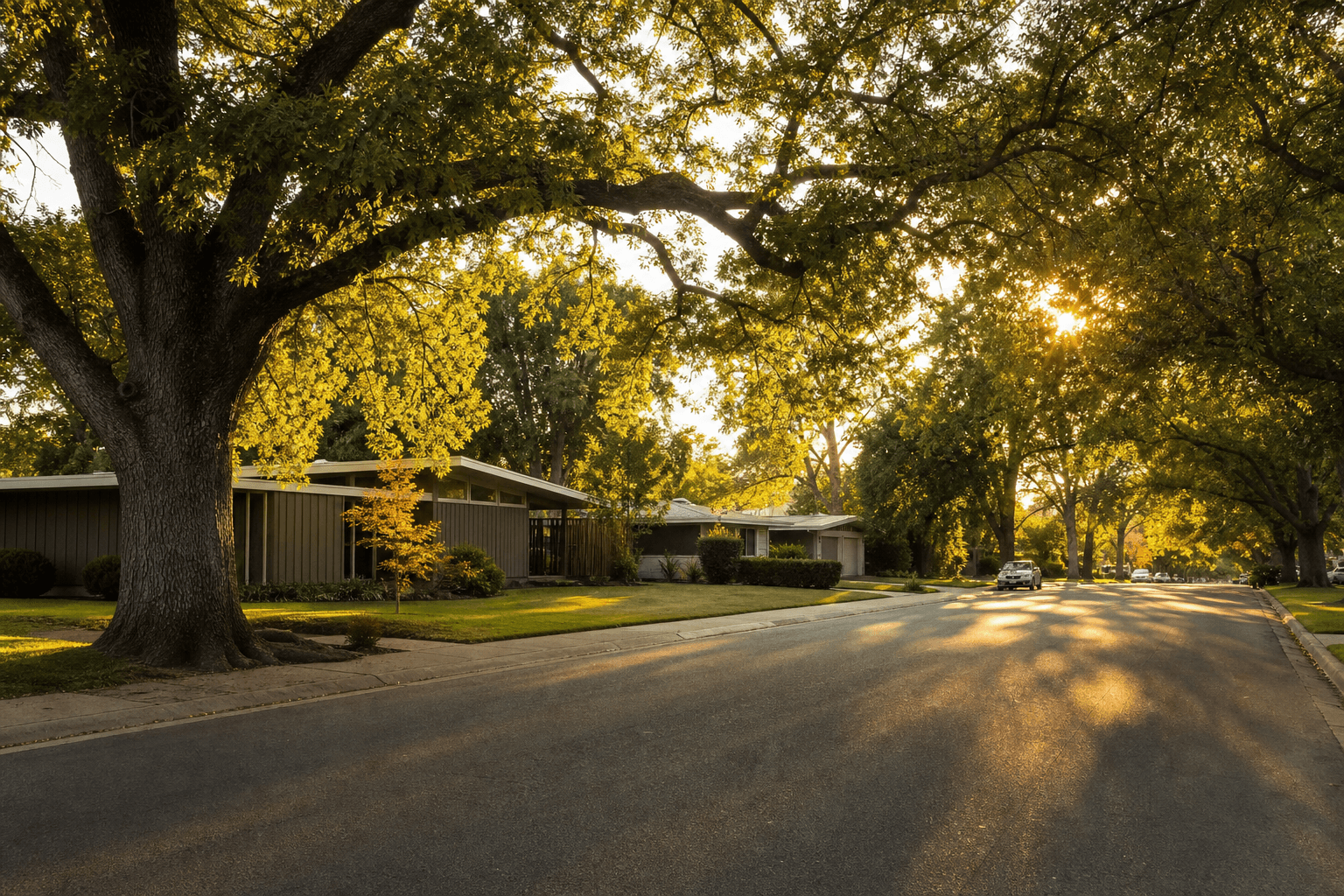
South Land Park, Sacramento
How local searches actually form
A useful local SEO plan starts with the language customers already use. That is often a service plus a place, a neighborhood landmark, or a practical job to be done — not the internal name of a page.
Point.Click.Engage is based in South Land Park, near William Land Park, the Sacramento River Bike Trail, and the South Land Park Hills Eichler Historic District. That local context informs keyword choices and page structure. The studio serves Sacramento and the surrounding region; a confirmed city-by-city coverage list has not been published, so project fit is established during scoping rather than implied by a map of unused city pages.
web developer near South Land Park
Neighborhood and proximity matter as much as the service label.
Sacramento local SEO for an existing website
The first job may be repair, not a rebuild.
Google Business Profile setup for a Sacramento studio
The listing and the site have to be planned together.
custom website and local search in one project
Architecture decisions should happen before launch, not after.
Thin city pages that only swap a place name into generic copy are not part of this service. If a location page is warranted later, it needs a real reason to exist.
Google Business Profile
Google Business Profile work is one of the keywords this page exists to own because the profile is often the first local result a customer trusts. The work is not a one-time form. It is a decision about categories, services, copy, media, and the page the listing should send people to.

The primary category and supporting categories should describe the actual work, not the broadest available label.
Profile copy should reuse confirmed business facts and service language from the website instead of inventing a second brand voice.
The linked URL should be the page that owns that offer. Sending every local click to a generic homepage wastes the intent the listing already earned.
Photos and posts should reflect the real studio, location, and work. Placeholder or mismatched media weakens an otherwise accurate profile.
Why the website is part of the work
Some Sacramento market sources now treat local map results and AI-search citations as related outcomes that depend on clean structure and consistent business data. That is a useful framing. It is not a reason to buy a speed claim or a guaranteed citation. The practical requirement is simpler: the site has to be crawlable, specific, and aligned with the listing.

Each important service needs a URL with a job. Repeating “Sacramento” on every heading does not create local relevance if the page still cannot answer the query.
Point.Click.Engage builds marketing sites on Next.js, not WordPress. Local SEO can begin on an existing site when the foundation is usable. When the current CMS, theme, or plugin stack is what is blocking the work, that belongs in the scope conversation.
See Next.js website developmentClear entities, useful answers, and consistent facts help traditional local search and give AI systems cleaner material to interpret. They are related services, not interchangeable labels.
Understand AI visibilityHow the work moves
Exact timing depends on the existing website, listing quality, content readiness, and whether a rebuild is already in scope. The sequence matters because visual or content work cannot fix an undefined local identity.
Document the services, audience, current site, listings, and the phrases Sacramento-area customers already use when they need this work.
Search and offer map
Compare the website, Google Business Profile, and relevant listings for conflicting names, addresses, categories, service language, and landing pages.
Conflict and gap list
Clarify page ownership, titles, internal links, metadata, and any structured-data foundations included in scope so each important URL has a job.
Local page architecture
Update categories, services, descriptions, and public records so they support the same confirmed facts as the site.
Consistent local record
Publish or improve pages and supporting content that answer real local questions without fabricating authority or manufacturing extra city URLs.
Stronger source material
Questions that change the scope
No. The profile is often the most visible local surface, but it cannot compensate for a site that has no clear service pages, conflicting business facts, or no useful landing page to send people to. The listing and the website have to be planned as one system.
Not by default. Sacramento and the surrounding region include many real cities, but a page that only inserts a city name into generic copy is a thin doorway, not a local SEO asset. Location pages belong in a later phase only when there is a genuine reason to publish them.
Local SEO is about being findable and accurately represented in local search and map results. AI visibility is about making the same business easier for answer engines to understand and cite. They share structured facts and useful pages; they are scoped as related services, not as one vague “ranking” package.
Explore AI visibilityAround the local footprint
Local SEO FAQ
That comparison shows up in Sacramento buyer research, but the useful answer is not a platform slogan. Local SEO depends on crawlable pages, clear service ownership, consistent business facts, and a Google Business Profile that matches the site. Point.Click.Engage builds marketing websites on Next.js rather than WordPress or Webflow, so the SEO plan is written for that foundation. An existing WordPress or Webflow site can still be assessed when the current property is otherwise usable.
Sometimes. The first step is to see whether the current architecture, content, metadata, listings, and Google Business Profile can be aligned, or whether the site itself is the constraint. Existing Next.js and React sites are also candidates for hosting takeovers when that is part of the need.
No. Search and map results are controlled by third-party platforms and can change. The work improves the clarity, consistency, and usefulness of the signals available to them. It does not sell placement claims the studio cannot control.
The studio is based in Sacramento’s South Land Park area and serves Sacramento and the surrounding region. A confirmed city-by-city service list has not been published, so coverage for a specific community is confirmed during the estimate conversation rather than implied by unused city pages.
Cost depends on the current website, listing condition, content needs, and whether the work is paired with a rebuild or ongoing publishing. Point.Click.Engage has not published fixed local SEO packages; an estimate follows a review of the actual footprint.
Only when useful pages or articles are part of the agreed scope. Ongoing publishing that supports local search and AI discovery is a separate AI content marketing service, written from the client’s real business facts rather than filler calendars.
Read about AI content marketingStart with the current record
Share the current website, Google Business Profile, service area you actually serve, and the searches you expected to win. That is enough to begin a grounded local SEO conversation.
5960 South Land Park Dr #695, Sacramento, CA 95822
Visit Point.Click.Engage